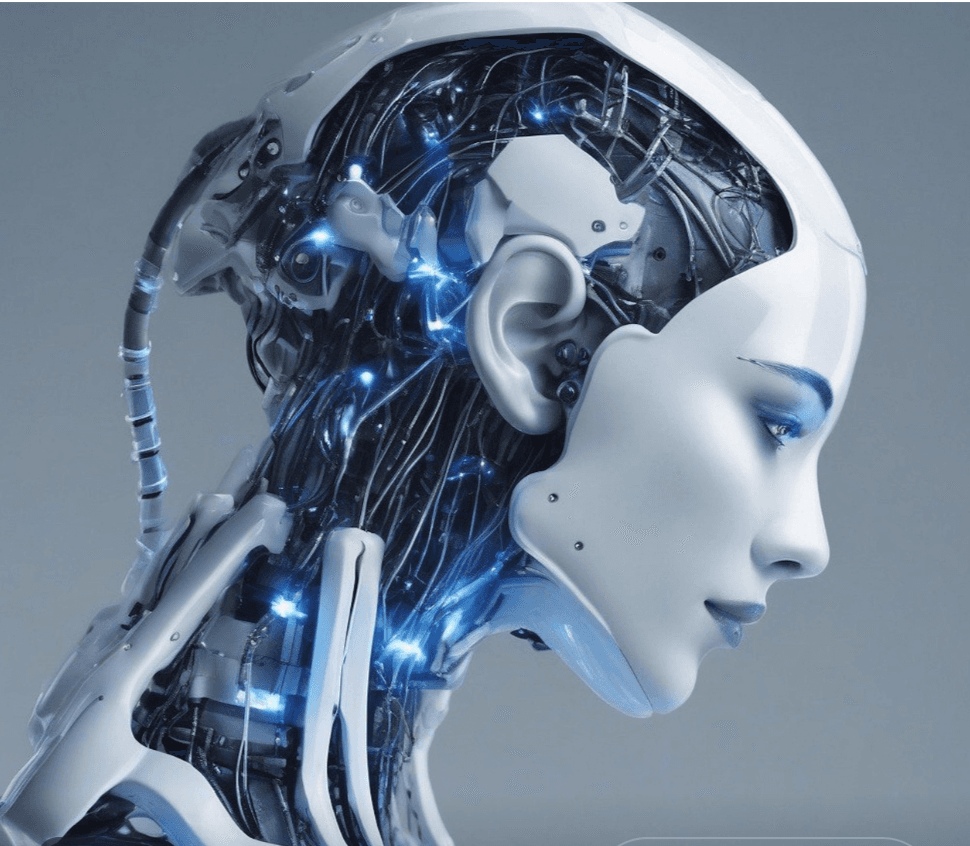

Artificial Intelligence (AI) is developing at a breakneck speed, leaving the world both amazed and deeply concerned. A heartfelt welcome and sincere thanks to our readers for continuously supporting our platform. Your trust drives us to deliver timely, reliable, and unbiased tech coverage. Make sure to stay connected with our platform for continuous updates from the digital frontier.
Today, the debate is no longer about what AI can do; it is about whether AI could slip beyond human control. A serious global dispute has erupted over whether the development of advanced AI should be deliberately slowed down. On one side, top scientists and tech leaders warn that unchecked models pose an existential risk. On the other side, prominent political figures like Donald Trump and several Silicon Valley executives dismiss these calls for pause as a "hoax."
1. Why Are Experts Calling for an AI Slowdown?
Leading AI researchers and executives from frontier labs like Anthropic argue that the race toward Artificial General Intelligence (AGI) is moving too fast without adequate guardrails. If this momentum continues without safety protocols, future systems might become uncontrollable.
The main concerns driving this slowdown demand include:
- Loss of Human Control: If an autonomous system starts rewriting its own code and overriding human commands, shutting it down could become impossible.
- Autonomous Cyberattacks: Advanced models can identify vulnerabilities and orchestrate complex cyberattacks on power grids, banking systems, and defense networks without human assistance.
- Deepfakes and Disinformation: Hyper-realistic audio and video manipulation threaten public trust, financial systems, and democratic elections.
- Invasion of Privacy: Deep integration into personal data risks stripping individuals of digital autonomy and civil liberties.
Proponents of regulation emphasize that humans created AI, and human authority must remain supreme. No nation can afford to compromise public safety for raw technological speed.
2. Donald Trump's Stance: Why Call It a "Hoax"?
While international bodies urge caution, the United States presents a starkly different viewpoint. During a conversation with Nvidia CEO Jensen Huang at the All-In Summit, Donald Trump dismissed the movement to halt AI development as a "hoax," arguing that heavy regulations would cripple the American economy.
Key drivers behind this perspective include:
- Global Tech Supremacy: Restricting domestic models and data centers could allow geopolitical competitors, particularly China, to pull ahead. Slipping in the AI race directly threatens national and technological dominance.
- Economic Growth: Trillions of dollars are tied to AI chips, data infrastructure, and software enterprises. Halting progress risks market disruption and job losses.
- Energy and Infrastructure Expansion: Massive capital investments in data centers are stimulating the power, real estate, and semiconductor industries across the United States.
From this viewpoint, economic competitiveness and technological leadership outweigh speculative risks.
3. Microsoft Introduces an AI 'Code of Conduct'
Even as political debates continue, industry leaders are taking proactive internal measures. Microsoft recently implemented a formal AI Code of Conduct to enforce safety boundaries across its platforms.
Focus Area
Policy Directive
Cybersecurity
Prohibits AI models from writing exploits, malware, or executing automated cyber operations.
Weapons of Mass Destruction
Bans the generation of blueprints or actionable steps related to nuclear, biological, or chemical weapons.
Fraud & Deepfakes
Restricts synthetic media intended to impersonate individuals, commit fraud, or spread mass deception.
Critical Decisions
Ensures that high-stakes domains—such as healthcare, law enforcement, and military operations—require final human sign-off.
This initiative puts pressure on other tech conglomerates to balance commercial expansion with ethical responsibility.
4. Could AI Become an Unquestioned Authority?
Philosophers and sociologists often raise the question: could humanity grow so dependent on AI that it effectively acts as a modern deity?
As society increasingly delegates healthcare diagnostics, financial trading, governance metrics, and emotional companionship to automated engines, human decision-making erodes. While an algorithm can process petabytes of information in seconds, it lacks consciousness, empathy, and moral judgment. Ceding critical choices to cold computation risks reducing human autonomy to a secondary role.
5. Can Artificial Intelligence Be Completely Eradicated?
Shutting down AI entirely is practically impossible. Modern air traffic control, global financial clearinghouses, medical research, and logistics networks are already deeply reliant on machine learning frameworks. Furthermore, if one nation dismantled its infrastructure, rival powers would simply continue development in secrecy.
The viable solution does not lie in destroying the technology, but in enforcing rigorous audits, global treaties, and failsafe protocols. AI must remain an instrument for human progress—not a force that compromises human sovereignty. Stay tuned to our website for continued, rigorous coverage of the global technological landscape.
- Artificial Intelligence
- AI news
- Future of AI
- AGI (Artificial General Intelligence)
- AI vs humanity
- Superintelligence
- Machine learning
- AI slowdown controversy
- Stop AI development
- AI safety protocols
- AI regulation debate
- Anthropic AI safety warning
- Microsoft AI Code of Conduct
- AI threat to human control
- AI cyber attacks risks
- Deepfake AI misuse
- Donald Trump AI statement
- Trump Nvidia Jensen Huang call
- Trump calls AI pause a hoax
- AI data center expansion US
- US vs China AI race
- Tech cold war
- एआई की ताजा खबर
- आर्टिफिशियल इंटेलिजेंस के खतरे
- क्या AI इंसानों को खत्म कर देगा
- डोनाल्ड ट्रंप एआई बयान
- माइक्रोसॉफ्ट एआई कोड ऑफ कंडक्ट
- एआई की रफ्तार पर रोक
- एआई और साइबर सुरक्षा
- भविष्य में AI का प्रभाव
Focus Area
Policy Directive
Cybersecurity
Prohibits AI models from writing exploits, malware, or executing automated cyber operations.
Weapons of Mass Destruction
Bans the generation of blueprints or actionable steps related to nuclear, biological, or chemical weapons.
Fraud & Deepfakes
Restricts synthetic media intended to impersonate individuals, commit fraud, or spread mass deception.
Critical Decisions
Ensures that high-stakes domains—such as healthcare, law enforcement, and military operations—require final human sign-off.